
Indian pilots train on Japan’s Shinkansen for Mumbai-Ahmedabad bullet train project
January 31, 2026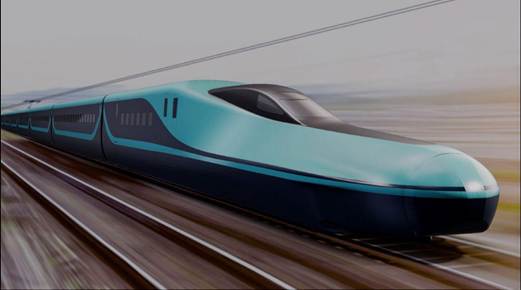
Niigata, Japan: As the sun rises over Niigata Station, 30-year-old Vishal dons the crisp blue uniform of JR East, preparing for a shift that would be unthinkable for most international trainees: taking the controls of a high-speed Shinkansen bullet train carrying hundreds of live passengers.
This is the frontline of India’s “National Project”—the Mumbai-Ahmedabad High-Speed Rail (MAHSR). For the first time in history, Japan has opened its active commercial lines to foreign trainees, allowing 15 elite Indian railway pilots to master the precision, culture, and technology of the Shinkansen.
The Selection of the “Elite 15”
The group consists of 15 mid-career professionals, mostly in their 30s, who are considered the “central pillars” of the future Indian high-speed rail network. These pilots were not chosen at random; all arrived with significant experience in Indian rail operations. Vishal, for instance, spent six and a half years operating the “Metro” in India before being selected for this intensive 13-month program.
The training is a collaborative effort involving the Japan International Cooperation Agency (JICA), JR East, and specialized consultants. The goal is to bring these pilots to the exact same technical and safety levels as Japanese Shinkansen drivers.
A Culture of “Point-and-Call”
One of the most significant shifts for the Indian pilots is adopting “yubizashi kakunin” (point-and-call). This involves physically pointing at signals, gauges, and clocks while calling out their status—a cultural safety staple in Japan that was entirely absent in Indian rail culture.
On the Joetsu Shinkansen line connecting Niigata to Tokyo, trainees are pushed to operate within razor-thin margins. While the Tohoku line is faster, the Joetsu line is ideal for training because its stations are closer together, forcing pilots to frequently practice the most difficult maneuvers: acceleration, deceleration, and stopping.
The Battle of Single Kilometers and Seconds
The level of scrutiny is intense. During one training run, an instructor noted that Vishal entered the Tsubame-Sanjo station platform at 68 km/h. The target was 67 km/h,. That single kilometer-per-hour difference is the focus of post-run debriefs, as it affects the precision of the final stop.
The pilots are also trained in “Schedule Recovery.” During a return trip from Tokyo, Vishal faced a one-minute delay. By performing mental calculations of speed and time between stations, he managed to recover the lost minute, arriving at his destination with a margin of error of less than five seconds. “Indian people are said to be good at math, and they are indeed very skilled at these calculations,” his instructor noted.
Simulating the Unpredictable
Beyond the tracks, the pilots spend hours in advanced simulators. Here, they face nightmare scenarios that cannot be practiced with passengers, such as a complete power failure from overhead lines while traveling at high speeds.
Instructors emphasize that even during an emergency, passenger comfort is paramount. Trainees are taught to manage technical failures and note observations without jerky movements that might unsettle those on board. “While checking the gauges is important, monitoring the driving speed and maintaining a smooth ride for the customers is essential,” Vishal was advised during a simulator session.
The Road to 2047
The training program is reaching its climax. After 13 months of lectures and practical driving, the pilots will undergo a final “Achievement Confirmation” level check. In late January, they are scheduled to experience the maximum speed of 320 km/h on the Tohoku Shinkansen—the same speed they will eventually maintain on the 500km route between Mumbai and Ahmedabad.
For pilots like Vishal, the mission transcends technical skill. Reflecting on his journey, he stated, “Just like my teachers in Japan, I want to be the pilot of safety in India for the high-speed rail”. As India adopts the E5 series Shinkansen vehicles, these 15 pilots are carrying home more than just the ability to drive; they are bringing back a century-old Japanese culture of absolute safety and punctuality.
Recent Stories
- Gujarat Likely to Get 11 Greenfield Airports as Centre Approves UDAN 2.0
- Petrol Pump Licence Suspended, Case Filed Against Rajkot Dealers Association Chief
- GIFT City to Get New International School; Priority Admission for Employees’ Children
- RBI Approves Merger of Two More Co-operative Banks in Gujarat
- Akota Bridge in Vadodara to remain shut for 14 days for Bullet Train Work