
Drought declaration after ground assessment as per manual rules: Gujarat Govt
September 11, 2026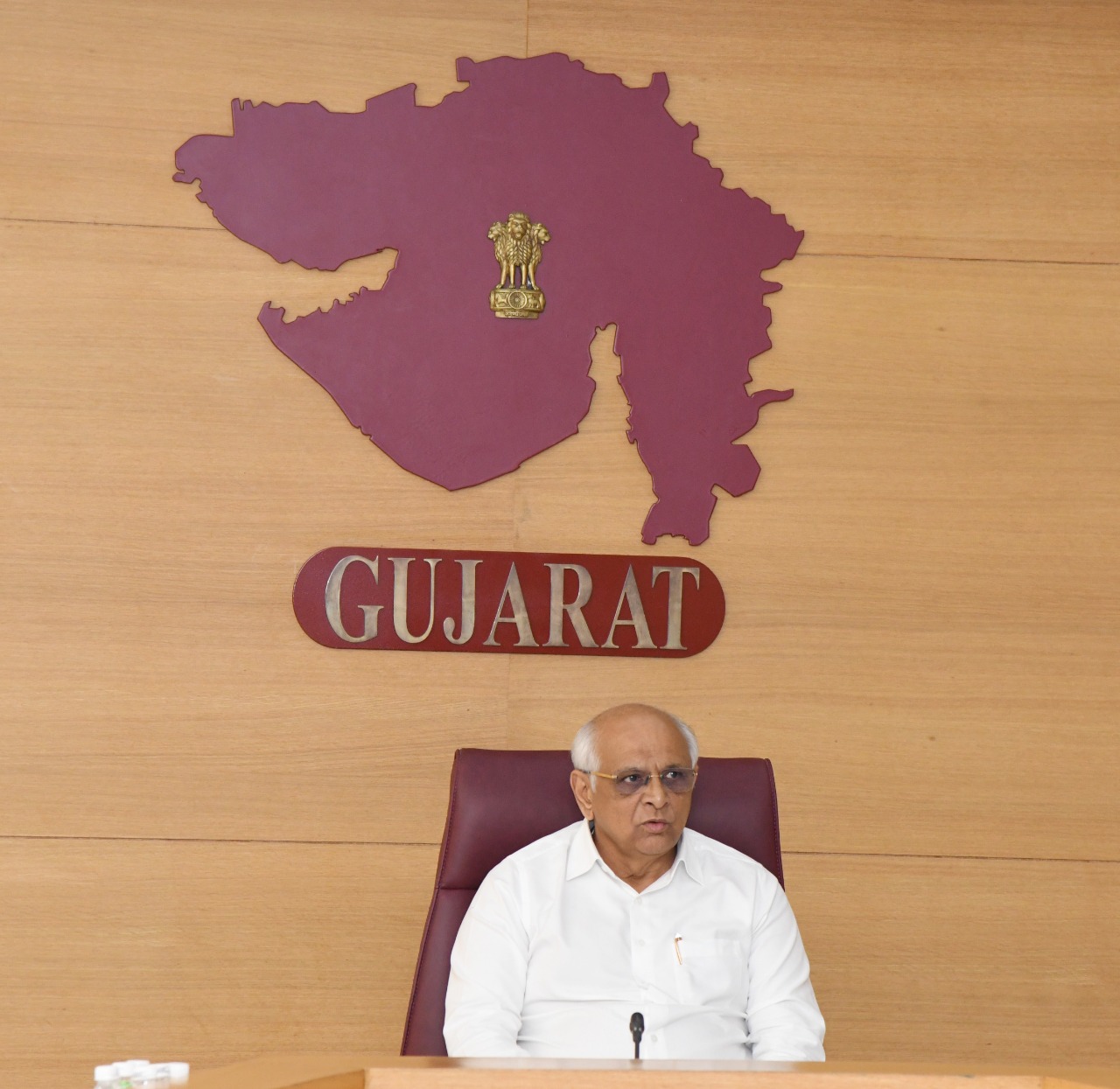
Gandhinagar: The Gujarat government on Friday said drought cannot be declared solely on the basis of rainfall deficiency and that a decision would be taken after scientific assessment and ground-truthing as prescribed under the Centre’s Drought Management Manual. The government said it is already taking precautionary measures, including subsidised fodder distribution, adequate water supply and additional electricity for agriculture, while continuing to monitor the situation.
Gujarat Chief Minister Bhupendra Patel said in the State Assembly that, according to the State Emergency Operation Centre (SEOC) report dated September 3, 2026, Gujarat has received 75.43% of its average seasonal rainfall, equivalent to 685.53 mm. While South Gujarat has recorded 103.91% rainfall, several districts have received significantly lower rainfall, including Devbhumi Dwarka at 6.41%, Porbandar at 18.12%, Jamnagar at 28.88% and Kutch at 29.29%.
The issue was raised in the Gujarat Legislative Assembly by Member Dr Tushar Chaudhary, along with Amit Chavda, Dr Kiritkumar Patel and Vimalbhai Chudasama, under Rule 116, drawing the attention of the Chief Minister (Revenue) to drought-like conditions in certain districts and the steps being taken to assess the situation.
94.24% of normal sowing area covered
Despite the uneven rainfall, sowing has been completed on 80.39 lakh hectares as of August 31, 2026, which is 94.24% of Gujarat’s normal sowing area of 85.30 lakh hectares.
Major crops have recorded substantial sowing, with groundnut at 107.99% of the normal area, pulses at 107.17%, soybean at 108.04%, paddy at 101.45% and cotton at 90.07%.
Water availability
The government said water availability in the Sardar Sarovar Dam is currently at 88.90% of its capacity, while other reservoirs in Gujarat have 66.07% of their total water storage. Of these reservoirs, 36 are currently under high alert.
For Kharif crops, irrigation planning has been carried out for 17.38 lakh hectares in the Narmada command area after reserving 2 million acre-feet (MAF) of water from the Narmada basin for drinking purposes.
The government also said drinking and irrigation water supplies in Saurashtra and North Gujarat are being maintained through the SAUNI Yojana and Sujalam Sufalam schemes.
Agricultural power supply increased
To protect standing crops amid the rainfall deficit, the Energy Department has increased agricultural power supply from eight hours to 10 hours a day in 132 taluka clusters across 21 districts.
The additional power supply is being provided in districts including Kutch, Jamnagar, Devbhumi Dwarka, Porbandar, Rajkot, Mehsana, Botad and Sabarkantha.
Gujarat Urja Vikas Nigam Limited (GUVNL) has also made arrangements for additional short-term power procurement for September and October to meet the increased demand.
Over 31 lakh kg of fodder distributed
The state has also made arrangements for fodder distribution at subsidised rates. District collectors have been authorised to distribute fodder based on local requirements, a measure that has been in place since July 2025.
The government currently has a fodder stock of 402.54 lakh kg.
So far, 31 lakh kg of fodder has been distributed at subsidised rates to 1,31,505 livestock belonging to 51,802 cattle rearers across 572 villages in Kutch, Devbhumi Dwarka, Jamnagar, Surendranagar and Porbandar.
Drought declaration to follow scientific assessment
The government said drought cannot be declared merely because of a shortfall or uneven distribution of rainfall.
Under the Central Government’s Drought Management Manual-2016 (Updated 2020), authorities are required to assess various indicators, including rainfall, the extent of crop sowing, the Normalized Difference Vegetation Index (NDVI), soil moisture and groundwater levels.
Based on Trigger-1 and Trigger-2 parameters, affected areas are identified for further assessment. A 10% physical verification, or ground-truthing, is then carried out in affected villages using GPS and smartphone-based applications.
The assessment is undertaken towards the end of the Kharif season and before harvesting, with the ground verification process to be completed by October 31. The extent of crop loss established through this process will form the basis for a decision on declaring an area drought-affected.
The government said it is therefore taking precautionary measures in advance, including subsidised fodder distribution, maintaining drinking water and irrigation facilities, and ensuring adequate electricity supply.
The rainfall, water, electricity and fodder situation is being reviewed daily in Cabinet meetings chaired by the Chief Minister and Committee of Secretaries (C.O.S.) meetings chaired by the Chief Secretary. The government said it will take an appropriate decision in the interest of the people based on the prevailing situation and scientific assessment.
DeshGujarat
Recent Stories
- Gujarat Deputy CM Harsh Sanghavi on Japan Visit
- Gujarat Govt Orders Criminal Action Against Contractor Over Poor Bridge Construction Quality
- Day 7 Navratri 2026 Live: Falguni Pathak Garba, LVP Vadodara, United Way of Baroda & More
- Illegal Bangladeshi Migrant Woman Nabbed in Junagadh
- AMC Seals Hocco Ice Cream and 7 Other Shops Near Law Garden
- Gujarat Govt Assures Adequate Electricity Supply; Secures Additional Power and Coal