
How Porsche built its reputation around performance and engineering
September 29, 2026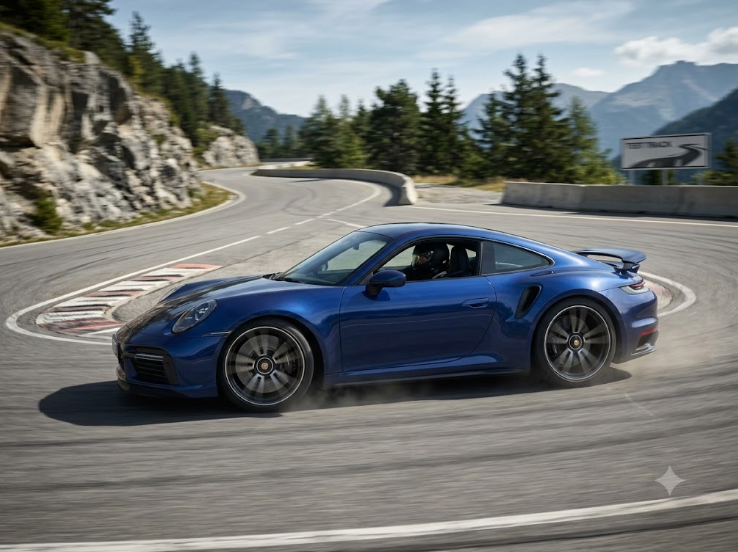
Ask someone to name a sports car. Most will say 911. That reflex didn’t happen by accident, and it wasn’t bought with advertising money. It was built slowly, through decades of engineering choices, several of which looked plain wrong at the time. Understanding how Porsche earned that reputation reveals a lot about how performance cars are actually developed, tested, and refined over long periods.
An engineering idea that refused to die
Start with the layout. Hanging the engine behind the rear axle is, on paper, a bad idea. Physics doesn’t like it. Early 911s could be unforgiving at the limit, particularly when a driver lifted off the throttle mid-corner, producing sudden oversteer.
Any sensible company would’ve moved the engine and started fresh.
Porsche didn’t. It kept the layout and engineered around the problem for over half a century: a longer wheelbase in 1969, wider rear tyres, revised suspension geometry, then adaptive dampers, torque vectoring, and rear-axle steering in the modern era. Each generation fixed a specific flaw rather than scrapping the whole concept.
Anyone comparing Porsche 911 price figures against rivals is really paying for that continuity: sixty years of iteration on a single idea instead of a clean-sheet redesign every decade.
Most people assume this was nostalgia. That’s only half the story. The rear-biased weight puts more mass over the driven wheels, giving the 911 a significant traction advantage under acceleration, particularly when exiting slow corners.
The supposed flaw turned out to be a feature, once someone understood it well enough to actually control it.
Racing as a laboratory, not a billboard
Plenty of brands claim motorsport improves the breed. Sounds reasonable. It rarely plays out that way, and most racing programmes are effectively marketing exercises with a separate engineering team that never really talks to the road car side.
Porsche ran it differently. Turbocharging arrived on track before it reached showrooms in any usable form. Ground-effect aerodynamics on the 956 transformed Porsche’s understanding of how an underbody could generate downforce efficiently.
. Dual-clutch transmission work began in endurance racing years before PDK became a road-car gearbox option. Hybrid energy recovery followed the same path, tested under the brutal load cycles of Le Mans, then adapted for daily use.
Here’s the part nobody tells you: racing doesn’t produce reliable road cars on its own. Race engines get rebuilt constantly. Road engines must survive years of school runs, cold starts, and neglected oil changes.
The discipline behind the badge
A lot of engineers quietly point to Weissach as the real reason Porsche’s cars feel consistent. It houses test tracks, wind tunnels, engine dynos, and crash facilities. Porsche’s engineering business has also spent decades developing technology for outside customers through Porsche Engineering. That outside work matters more than people realise. Solving problems for other companies forces a team out of their own assumptions fast.
The testing culture is famously repetitive in the best way. Prototypes cover punishing durability cycles in extreme heat and cold, then get run hard around demanding circuits to check brake fade, oil surge under sustained cornering loads, and gearbox temperatures at the edge of tolerance.
Small details follow directly from that work: features such as dry-sump lubrication on high-performance models, larger oil-cooling capacity and track-focused brake systems reflect the demands of sustained hard driving.
This is also why the range holds together. Look across Porsche cars and a shared engineering language runs through everything, covering the sports models, the SUVs, and the electric saloons.
What all that engineering costs the owner
A reputation built on precision also comes with a bill attached, and buyers should go in clear-eyed.
Servicing is expensive, and parts aren’t cheap. Performance tyres wear quickly if the car’s driven the way it was designed to be driven. Ceramic brakes last a long time, but replacing them when they finally go costs serious money.
The options list is another trap: many desirable features sit behind extra-cost boxes, and two cars wearing identical badges can differ enormously in real-world specification and eventual resale value. Identical-year 911s regularly vary by tens of thousands at auction purely because of boxes ticked at the factory.
Then there’s the ride. Sports suspension setups feel taut and communicative on smooth tarmac. On broken city roads? Firm. Sometimes genuinely tiring. Buyers who want the badge without the constant battering should look closely at adaptive damper options and smaller wheel sizes, as both soften the experience noticeably without gutting the handling character.
The real question is what’s actually being bought here. Not just speed. A family SUV can do 0-60 in four seconds. What decades of engineering discipline actually delivers is predictability: the sense that the car behaves the same way on the tenth hard corner as it did on the first, in the wet as well as the dry, cold or warm.
Recent Stories
- Gujarat Delegation Holds Textile Roundtable in South Korea, Invites Investment in PM MITRA Park
- Ahmedabad Town Hall to get a modern makeover; renovation to be completed in two years
- AMC to use rapid testing kits to check food quality at Diwali sweet and farsan stalls
- AMC to host special Garba at Kankaria Lakefront on Oct 24
- GSRTC to operate 2,400 extra buses for Diwali, plan over 8,000 additional trips
- Ahmedabad Book Fair 2026: Stalls More Than Double to 700+, New Attractions Added