
Prime Minister Narendrabhai Modi to visit Gir on World Wildlife Day
March 02, 2025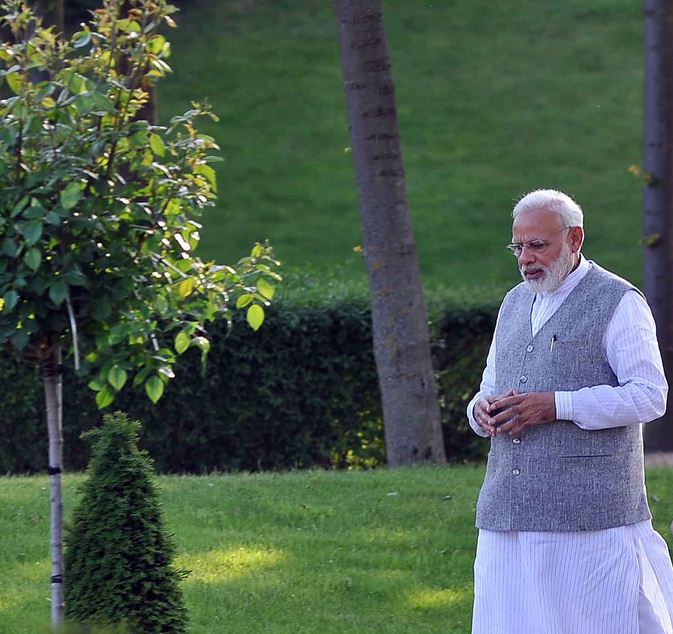
Gandhinagar: Tomorrow i.e.on 3rd March, the world will mark World Wildlife Day, with the theme for 2025 being Wildlife Conservation Finance: Investing in People and Planet. This theme underscores the vital role of sustainable funding in global conservation efforts. Marking this occasion, the Prime Minister Shri Narendra Modi will visit Gir-Somnath in Gujarat tomorrow.
Currently, Asiatic lions inhabit approximately 30,000 square kilometers across 53 talukas in 9 districts of Gujarat. The state government has undertaken numerous initiatives to conserve these majestic creatures and protect other wildlife species. Additionally, as part of a national project, a National Referral Center for Wildlife is being established on over 20.24 hectares of land at New Pipalya in Junagadh district. Moreover, a high-tech monitoring center for wildlife tracking and a state-of-the-art hospital have also been set up in Sasan to strengthen conservation efforts.
Various measures have been taken in Gujarat for the conservation of Asiatic lions. In 2024, 237 beat guards (162 men and 75 women) were recruited in Gir to patrol protected areas and safeguard lion habitats. To address the minor issues faced by local communities in Gir, the ‘Gir Samvad Setu’ initiative has been launched, and so far, 300 such programs have been organized. Additionally, nine breeding centers have been established for the conservation of herbivorous animals. A Standard Operating Procedure (SOP) has been formulated in collaboration with the Railways to prevent potential accidents caused by lion movement on railway tracks in the Greater Gir region. In 2022, during the celebration of ‘World Lion Day’ organized, approximately 13.53 Lakhs people participated, setting a world record.
In 2007, he personally visited the Gir forest to assess the ground realities and gather insights. Following this, he spearheaded transformative initiatives aimed at the holistic development of the Gir region, the conservation of lions, and the preservation of its rich biodiversity.
Key Initiatives Taken in 2007
* After the 2007 poaching incident, the Government of Gujarat established the Greater Gir Wildlife Protection Task Force Division, Junagadh, to monitor wildlife crimes, gather intelligence, and strengthen the protection and conservation of Asiatic lions and other wildlife within the Asiatic Lion Landscape.
* The concept of Bruhad Gir was introduced, expanding the conservation focus beyond Gir National Park and Sanctuary to cover a 30,000 sq. km area from Barda to Botad, where Asiatic lions are found. With the development of Greater Gir, he also ensured the welfare and progress of local communities.
* For the first time in Gir Protected Area, women beat guards and foresters were recruited in the Forest Department. Today, nearly 111 women are actively working in Gir area.
* A monthly review meeting on the status of Gir and its lions was conducted under the chairmanship of the IG (Inspector General), Junagadh Range.
* Established in 2007, the Gujarat State Lion Conservation Society (GSLCS) supports Asiatic lion conservation through public participation. It funds veterinary officers, animal keepers, trackers, and other manpower essential for lion protection. Revenue from Gir eco-tourism contributes to GSLCS, which utilizes funds for wildlife conservation and forest department infrastructure.
* The Government of Gujarat launched the Vanya Prani Mitra scheme to enhance lion conservation efforts. This initiative focuses on raising awareness, monitoring lion and wildlife movements, and assisting the Forest Department in rescue operations and protection efforts.
Promotion of Eco-tourism in Gir:
The ‘Khushbu Gujarat ki campaign, was launched by the Tourism Department, Government of Gujarat. This campaign attracted a major tourist inflow and enhanced the visibility of the Protected area by inviting tourists from across the country as well as from other countries, bringing Gir on the global tourist map.
The growth of eco-tourism in Gir has not only contributed to wildlife conservation but has also transformed the livelihoods of thousands of local residents, fostering sustainable development in the region. A total of about 33,15,637 tourists have visited Gir protected area during the last five years.
Local livelihood opportunities:
To manage both conservation efforts and tourism pressure on Gir, Ambardi Safari Park was established in 2017. The introduction of the Gir Online Permit Booking System has further streamlined the safari experience.
Eco-tourism has also benefited local artisans, handicraft workers, and farmers from Sasan to Talala and Junagadh, enabling them to sell their products directly to visitors. Many villagers now own shops selling local goods, while some operate transportation services, further enhancing the local economy.
In total, 1,000 families are directly benefited by being engaged in eco-tourism-related activities. Indirectly about 15,400 families are befitted for livelihood around Gir by the Eco-tourism.
The local sugarcane Jaggery, Kesar mango of Gir region and mango juice and other mango pulp and other products, Ghee of Gir cow, fruits, Kesuda flowers etc. are very popular among the tourists for local purchase, apart from the souvenirs.
Related Stories
Recent Stories
- Farmers Rejoice as Narmada Water Reaches Dwarka District Under SAUNI Scheme
- 2.5 Kg Silver Crown Offered to Bhagwan Krishna at Bhalka Tirth by Ahmedabad Devotee Family
- NHAI Revises FASTag Annual Pass Fee; Up 2.5% from April 1
- Two LPG Carriers Cross Strait of Hormuz, Set to Reach Mundra and Kandla Next Week: Centre
- Commercial LPG Shortage Triggers Sigdi Rush in Rajkot; Prices Double, Wait Time Extends