
Rapido Gears Up to Challenge Zomato, Swiggy with Cheaper Food Delivery
June 10, 2025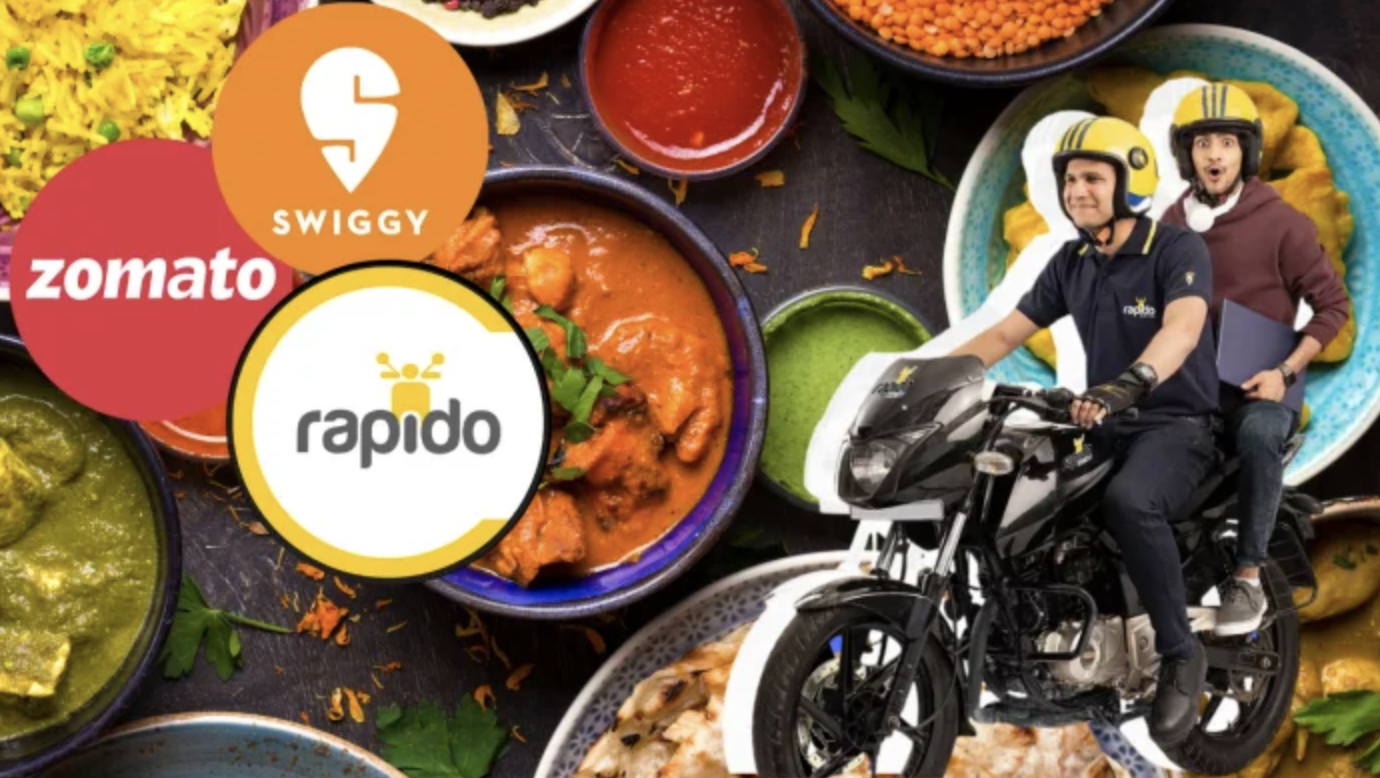
Ahmedabad: Rapido, widely known for its bike taxi services, is preparing to enter the food delivery space with a strong consumer-first approach. The company’s mission is simple yet ambitious: “Everyone deserves the freedom to choose and enjoy an affordable meal.” To that end, it is piloting a food delivery service in Bengaluru, aiming to challenge the long-standing dominance of Zomato and Swiggy.
According to news reports, Rapido has named its upcoming platform “Ownly” (though the name may change before its full launch), with the goal of offering reasonably priced meals to consumers while eliminating inflated online markups.
In a move that could reshape the aggregator-driven market, Rapido aims to attract restaurant partners by slashing commission fees. While Zomato and Swiggy typically charge between 16% and 30%, Rapido plans to keep its rates between 8% and 15%, depending on the order value, according to The Economic Times.
Rapido has also signed commercial agreements with restaurants through a tie-up with the National Restaurant Association of India (NRAI). Its delivery charges are straightforward: ₹25 for orders below ₹400 and ₹50 for those above, when ordered via the Rapido app.
The service is expected to launch as a pilot in Bengaluru by late June or early July. One executive noted that this move could be especially beneficial for small restaurants struggling with the high fees charged by current aggregators.
Crucially, the cost of delivery will initially be borne by restaurant partners—not by end consumers. Rapido’s approach ensures that online food prices match offline rates, addressing a key concern among users who are often deterred by steep markups, which sometimes reach as high as 40%.
What Will Rapido’s Food Delivery Look Like for Customers?
Fees Breakdown (Example)
| Fee Component | Swiggy | Zomato | Rapido |
|---|---|---|---|
| Cost of Fixed Burger Meal | ₹199 | ₹199 | ₹199 |
| Dish Price on Platform | ₹315 | ₹315 | ₹199 |
| Delivery Cost (5 km) | ₹78 | ₹35 | ₹25 |
| Packaging Cost | ₹29 | ₹29 | ₹0 |
| Platform Fees | ₹12 | ₹10 | ₹10 |
| GST (as applicable) | ₹17 | ₹13 | ₹0 |
| Total | ₹451 | ₹402 | ₹234 |
Despite earlier attempts by challengers like Coca-Cola-backed Thrive failing to scale, and other alternatives like ONDC, Magicpin, Zepto Cafe, and Swish still being in early stages, Rapido sees a genuine opportunity. The company already facilitates over 4 million rides across 500 cities and has more than 30 million monthly active users—a scale it believes will fuel its food delivery ambitions.
In its pitch to restaurants, Rapido promotes the idea of “honest pricing” and mandates that partners list at least four meals priced at ₹150 or less. This is aimed at reaching underserved users in Tier 2 and Tier 3 cities. The strategy is designed to make online food delivery accessible to a broader segment of the population—Bharat—which has largely been priced out of the market.
Rapido’s long-term revenue model involves shifting to a subscription-based plan for restaurants, foregoing traditional commissions. Additionally, the company will open up advertising and data-sharing options, creating new revenue streams.
While Zomato and Swiggy currently handle over 4.5 million daily orders and control 95% of the $8 billion market, Rapido’s low-cost, high-volume approach aims to disrupt the status quo.
From Ride-Hailing to Food Delivery: A Risky Shift?
Rapido’s entry follows a string of unsuccessful food delivery experiments by other ride-hailing players.
Ola, for instance, launched Ola Cafe in 2015 and later acquired Foodpanda India in 2017. Despite significant investment, both initiatives were eventually shut down. By 2019, Ola exited the food delivery space, citing operational hurdles and fierce competition.
More recently, Ola re-entered the market through the government-backed Open Network for Digital Commerce (ONDC), quickly becoming one of its top-performing platforms. As of mid-2024, Ola was processing 15,000–20,000 orders daily and accounted for nearly one-third of ONDC’s food delivery activity in metro areas like Delhi-NCR and Bengaluru.
Uber, meanwhile, launched Uber Eats India in 2017 but exited in 2020, selling the business to Zomato in an all-stock deal valued at $206 million. The transaction gave Uber a 9.99% stake in Zomato. Since then, Uber has not returned to the Indian food delivery sector. DeshGujarat
Recent Stories
- Another Fake Ghee Manufacturing Racket Busted in Surat, 2,200 Containers Seized
- AMTS Bus Gutted in Fire in Ahmedabad
- Dehgam Milk Producers Protest in Gandhinagar, Demand Freedom to Sell Milk to Dairy of Choice
- Rs 15.65 Crore Loan Scam Exposed at Kantha Sugar Mill in Surat
- Elderly Man Throws Acid on Wife in Surat Family Court, Consumes Poison Afterward