
Gujarat Govt Clears ₹1,423 Crore for Phase-2 of Ghed Area Flood Control Project
March 13, 2026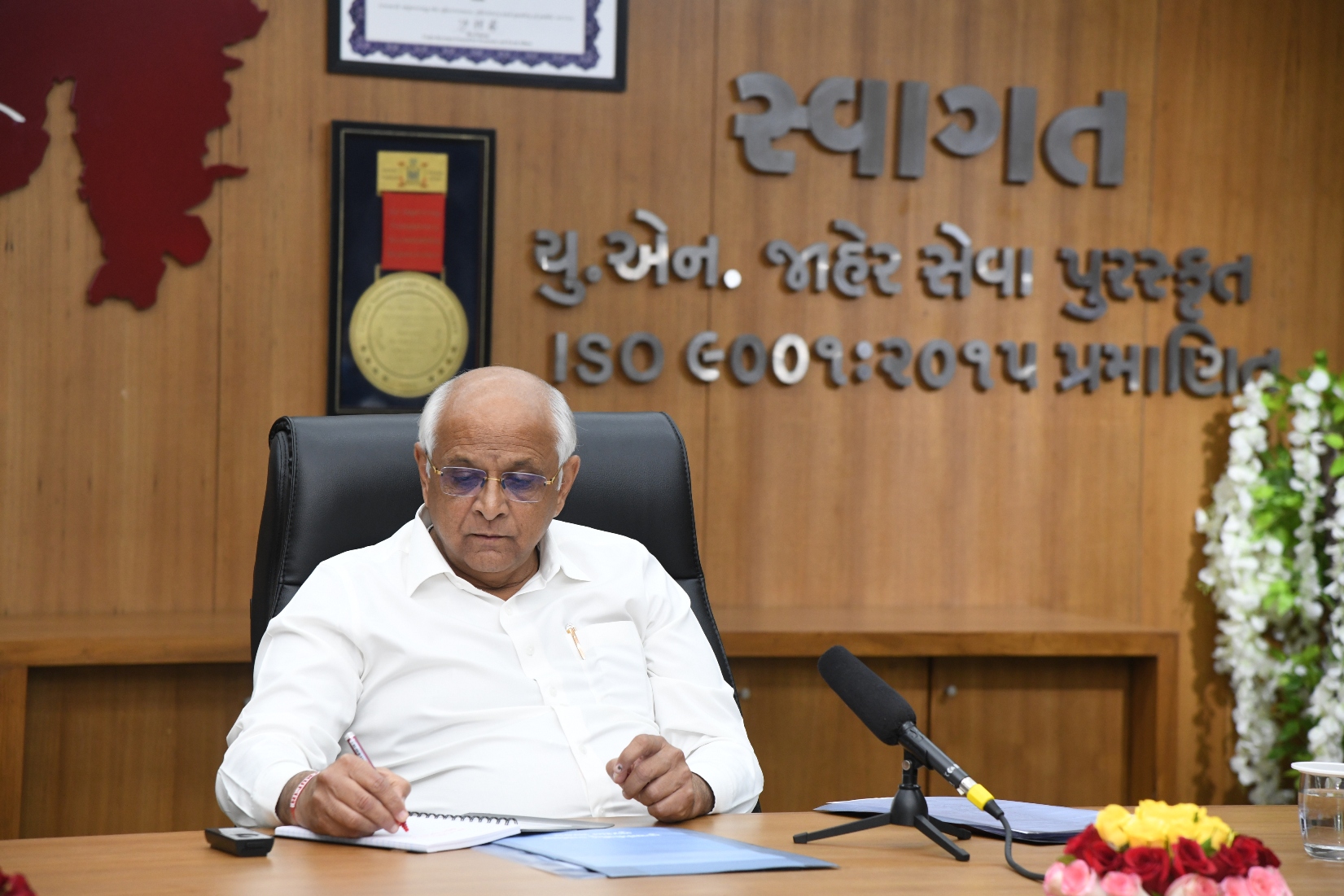
Ahmedabad: In a major decision aimed at protecting agricultural land in the flood-prone Ghed region of Saurashtra, the Gujarat government has granted administrative approval for a ₹1,423-crore project, Minister for Water Resources and Water Supply Ishwarsinh Patel announced on Friday. The project is expected to provide relief to farmers and residents of villages across six talukas of the Ghed belt, which faces severe flooding during the monsoon.
The minister said the decision has been taken to ensure a permanent solution to rainwater accumulation in the Sorathi Ghed and Barda Ghed areas, where large stretches remain waterlogged for months every year. The project will be implemented in phases, with 17 works under Phase-1 and 12 works under Phase-2 planned to be completed over the next two years.
A consultant agency had conducted a detailed survey to study drainage patterns in the region. Based on its preliminary report, the state government had granted in-principle approval in January 2025 for works worth ₹1,534.19 crore, including ₹1,184.18 crore for Sorathi Ghed and ₹350.01 crore for Barda Ghed.
The Ghed region lies in the delta area near the mouths of rivers such as Bhadar, Ozat, Madhuvanti, Meensar, Vartu and Sani flowing through Junagadh, Porbandar and Devbhumi Dwarka districts. As these rivers become shallow and flat near their mouths and lack proper embankments, floodwater spreads beyond the river channels and covers the entire Ghed belt. During the monsoon, the area remains waterlogged for nearly four to five months, making agricultural activity difficult and disrupting connectivity between villages.
Phase-1 works in progress
The minister said the project has been planned in three phases. For Phase-1, administrative approval of ₹139.42 crore was granted in April 2025 for immediate drainage works in Sorathi and Barda Ghed. These include desilting of rivers and canals, removal of bushes and trees obstructing water flow, and dismantling of structures such as check dams that restrict drainage.
At present, 17 works are in progress under Phase-1 — three in Sorathi Ghed of Junagadh district, seven in Sorathi Ghed of Porbandar district and seven in Barda Ghed — mainly involving excavation of rivers, channels and canals. These works are expected to be completed before the monsoon of 2026.
₹1,423 crore approved for Phase-2
For Phase-2, the consultant’s report was reviewed by IIT Gandhinagar, after which the state government granted administrative approval of ₹1,423.4 crore, including ₹1,118.54 crore for Sorathi Ghed and ₹304.86 crore for Barda Ghed.
The works under this phase include strengthening of river banks, desilting of rivers and canals, clearing vegetation, revival of blocked channels, replacement of small cross-drainage structures with larger ones, construction of water-divide structures where required, and renovation or replacement of tidal regulators to increase discharge capacity. Existing ponds and regulators will also be deepened and widened to enhance water storage and reduce wastage.
About the Ghed region
The Ghed region covers delta areas of rivers such as Bhadar, Ozat, Madhuvanti and Meensar in Keshod, Manavadar and Mangrol talukas of Junagadh district, and Porbandar, Ranavav and Kutiyana talukas of Porbandar district. It mainly includes Sorathi Ghed and Barda Ghed.
Because the region lies near river mouths where channels are shallow and without strong banks, floodwater spreads across the triangular delta belt, leaving villages surrounded by water for months during the monsoon. This disrupts transport and delays agricultural operations. Farmers often miss the monsoon crop, and late floods delay sowing of winter crops, resulting in low yield.
Salinity caused by seawater intrusion and soil erosion due to repeated flooding have also reduced land fertility. In the past, works such as river remodeling, drainage channels, interlinking of rivers, culverts and bunds were undertaken, but over time siltation and vegetation blocked the drainage system, worsening the flooding problem.
The minister said that after completion of the project, the problem of long-term waterlogging in the Ghed region is expected to be largely resolved, bringing major relief to farmers and villages of the area. DeshGujarat
Recent Stories
- Ahmedabad RTO Crackdown on Illegal White LED Lights; Over 1,000 Motorists Fined in 2 Months
- Gujarat BJP forms State Election Management Committee for upcoming local polls
- Light Rain Likely Next Week in Parts of Gujarat, Heatwave to Ease: IMD
- AMC Cow Shelter Supplies 350 Kg Cow Dung Sticks as Cooking Fuel to Replace LPG
- Atal Bridge-inspired Pedestrian Bridge Built at Umarsadi Coast in Valsad for ₹9.5 Crore