
Inside GIFT City’s State-of-the-Art Command & Control Center: The Future of Urban Operation Is Here
November 27, 2025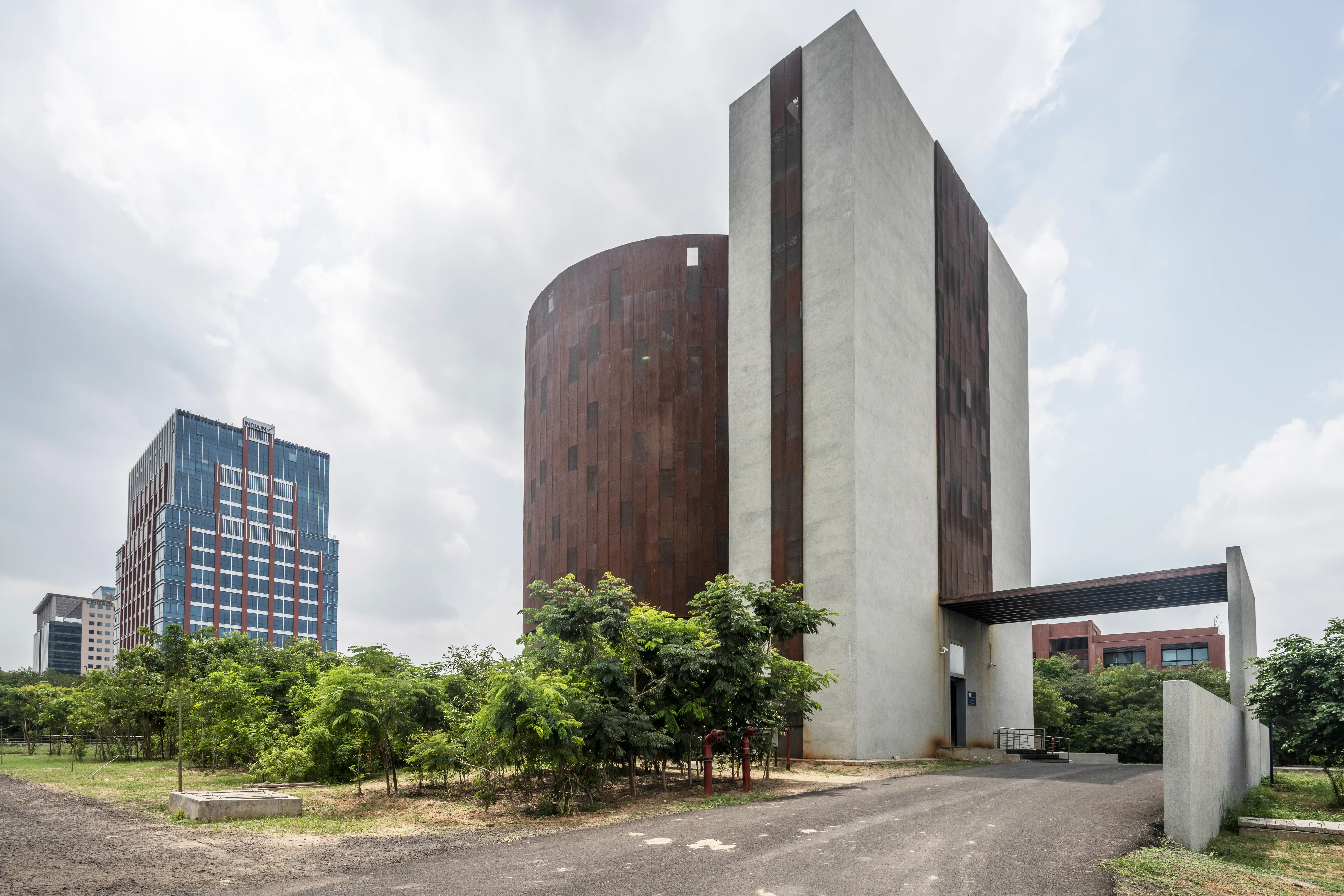
GIFT City – Most cities around the world — including many in the developed world — would be envious of the advanced, technology-driven city management system operational at The Gujarat International Finance Tec-City (GIFT City) in Gandhinagar. The way GIFT City functions makes you feel that the future isn’t something to look forward to; it’s already here, fully active and integrated into everyday urban life.
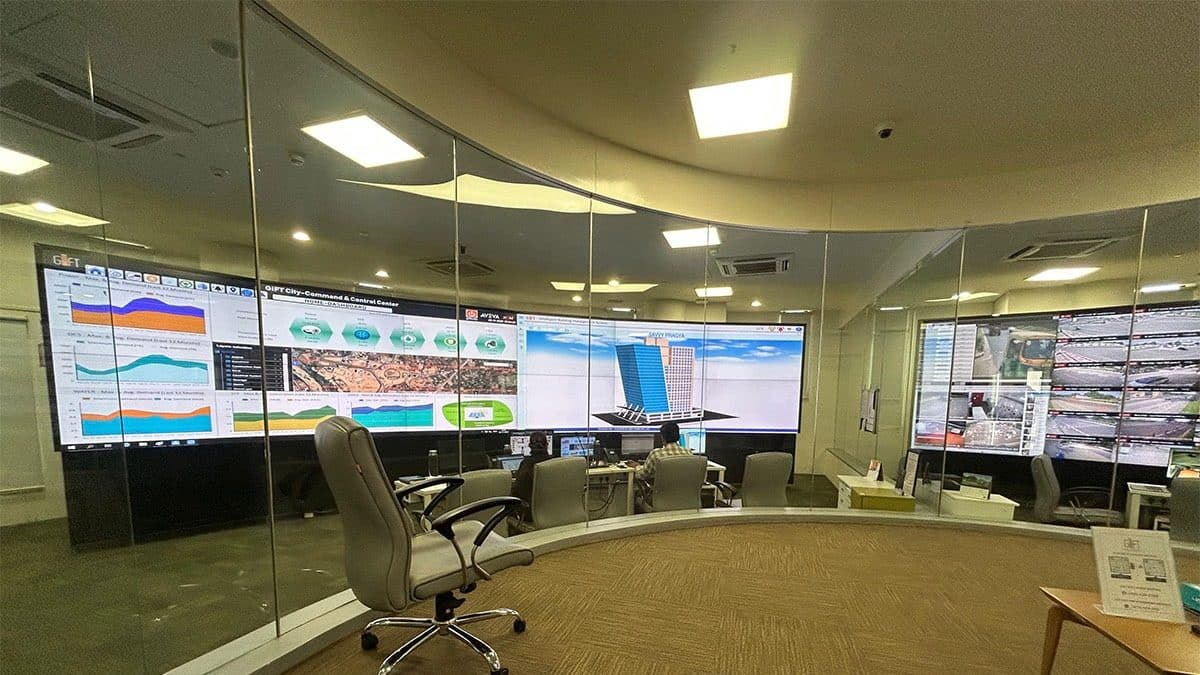
At the heart of GIFT City lies its City Command and Control Centre (C4), which we visited for an inside look. On the third floor is the city’s state-of-the-art, technology-driven control room, equipped with three massive display walls—each containing multiple live data screens. From road movement and traffic flow to building elevators, fire sensors, water supply, waste water, centralized cooling system, utility tunnel, streetlights and power systems, every critical urban function is at the operators’ fingertips. The entire city can be observed, monitored, and even remotely operated from this hub, 24 hours a day.
The C-4 is strategically divided into two primary zones: one dedicated to external surveillance and the other managing the Intelligent Management System (IMS) and SCADA platforms.
Advanced Surveillance and Building Monitoring
The C-4’s surveillance wing utilizes more than 417 Night Vision AI-based cameras to monitor the external environment 24/7. An Automatic Number Plate Recognition (ANPR) system automatically registers vehicles at all four entry and exit points, and it features a blacklisting facility to alert security teams if a vehicle noted in connection with past issues enters the city.
The video analytical platform automatically generates alerts for specific safety concerns, including wrong-side driving detection and crowd gathering. Specialized alerts are triggered if personnel enter the highly magnetic field of the EPS switchyard during the day, or if they violate restrictions on working in the utility tunnel area after 6:30 PM.
The Intelligent Building Management System (IBMS) is mandatory for all 24 live buildings in GIFT City. This platform, based on a customized solution from Mitsubishi Ikonics (a platform also used by the Pentagon but customized as per the requirements of GIFT City), provides real-time monitoring of common area fire and smoke detectors, which are precisely mapped onto 3D floor plans. These alerts are instantaneously replicated to the C-4 and the co-located Fire Station.
The C-4 also monitors common area CCTVs and the Elevator Monitoring System (EMS), providing live status of elevator location, direction, inside realtime view and occupancy. Crucially, the system allows city personnel to remotely control elevators and track the movement of people within the buildings during emergencies or criminal activity. The customization of the IBMS is so extensive that GIFT City takes separate feeds from every single detector (e.g., 5,000 individual detectors in one building), ensuring that the city’s alarm capability remains functional even if a building’s own internal management system fails.
SCADA and Zero-Waste Utilities
The city’s core infrastructure utilizes the SCADA platform to manage and monitor five key utility plants: Power, District Cooling System (DCS), Water Treatment, Waste Collection, and Sewage Treatment. This system performs big data analysis to forecast monthly requirements for water and power, ensuring resource availability.
GIFT City operates on a zero-discharge water concept, ensuring no water is wasted. After initial use (drinking), the water is treated at the Sewage Treatment Plant and recycled for reuse in the DCS, landscaping, and toilet flushing. The water quality from every tap meets WHO standards for drinking water, eliminating the need for individual RO plants. SCADA sensors are installed across the pipeline network to detect leaks, with the aim of ensuring a “water-loss-free” system where the volume of water released equals the volume received by the end-user.
District Cooling and Automated Waste
Conventional air conditioning units are prohibited across GIFT City. Instead, the centralized District Cooling System (DCS) provides “Cooling as a Service,” using chilled water supplied to buildings at 5 degrees Celsius. This method eliminates the need for external AC units or chiller plants, and is estimated to be approximately 30% more efficient than conventional ACs. Users receive a monthly bill for cooling and can adjust their tonnage requirement via an application to the DCS. Maintenance is entirely handled by the city, eliminating the hassle and expense for the end-user.
Solid waste is managed by an Automated Waste Collection System (AVWCS). Waste is segregated into dry and wet bins via chutes on every floor. When sensors detect a bin is full, the central plant initiates a vacuum suction process, transporting the waste through underground pipes at speeds of 70 to 80 kilometers per hour to the handling plant. This automation eliminates the need for garbage collection vehicles. Non-recyclable plastic waste is currently compressed and given to the municipal corporation for disposal.
Predictive Maintenance and Ecosystem Integration

The entire GIFT City system is built on the concept of predictive maintenance. This means that the monitoring systems are designed to detect potential failures in utility plants, residential buildings, or offices before the residents or workers become aware of the issue.
For rapid emergency response, the Fire Station, Police Check Post (Chowki), and Polyclinic are strategically co-located in the same building to facilitate close coordination.
To guarantee functionality upon occupancy, developers are mandated to achieve “Ready for Service” (RFS) status before receiving an Occupancy Certificate. This requires that every flat or office be provisioned with basic services like DCS cooling, PNG gas (monitored by gas leak detectors), and six terminated fiber cores for immediate internet and telecom services, meaning the wiring is complete and ready for immediate plug-and-play use. Solar power generation currently remains minimal, estimated at 5.9, though efforts are underway to increase its capacity.
Cybersecurity and Redundancy Protocols
The city prioritizes cyber resilience by implementing a core strategy of using hard-wired infrastructure. All critical systems are isolated from the public internet, connected only through GIFT City’s dedicated fiber optics that run through the utility tunnels directly to building routers. This design avoids the use of intervening electrical components, enhancing security.
For data integrity, all recordings are maintained for 35 to 40 days. Data storage follows an N+2 redundancy concept, meaning that data is recorded simultaneously across three sites. To ensure operational continuity, the two server rooms flanking the C-4 are identical, and the main video display wall can be fully replicated to the backup system within five to ten minutes. Staff training includes protocols for functioning during catastrophic events, utilizing proprietary handsets and walkie-talkies to maintain communication even if internet and landlines fail. DeshGujarat
Recent Stories
- IMD Forecasts Unseasonal Rain in Parts of Gujarat from April 19 to 21
- ACB Gujarat nabs GST Superintendent and Inspector red-handed accepting Rs. 10 lakh installment of Rs 55 lakh bribe
- Killing of Hindu Youth in Dhandhuka Triggers Arson, Vandalism; Accused Held
- Had to quit as Lenskart trainee as I refused to remove Tilak and Shikha: Surat Youth
- 8 held in Kheda for blackmail, rape of minor Hindu girl