
Gujarat students are all set to welcome comet ISON on 28th November 2013
October 29, 2013
Ahmedabad, 29 October 2013
The excitement in the air is palpable. Astronomers across the globe are polishing their telescope lenses, and wiping down their solar filters.
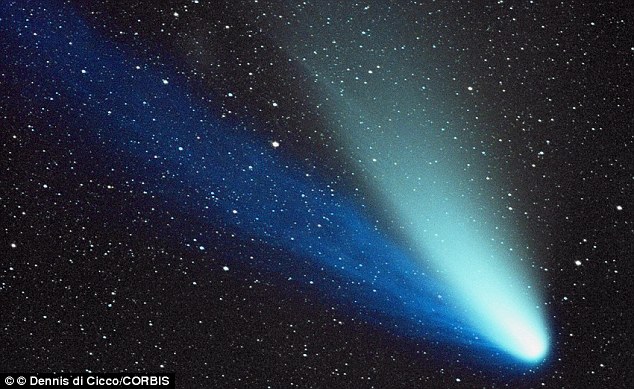
Comet ISON is coming to our sky within a month time, more precisely on 28th November 2013, and there it will shine brighter than the moon, providing amazement, awe and inspiration to the world, and heralding forth a new era of peace and serenity across our planet!
Gujarat students are now preparing for the Diwali Vacation with lots of new ideas on comet ISON. While one group of students are writing essays on comet and its arts and science, the other groups are collecting the tale of comets from their grandparents and localities. Even few are in the creative mind to write science fiction on the arrival of ISON closer to Sun and Earth.
In order to sensitize the children and the community members, the Gujarat Council on Science & Technology (GUJCOST) and Gujarat Science City, both working under the aegis of the Dept of Science & Technology, Govt of Gujarat, have started a month-long count down for the safe observation of Comet ISON on 28th Nov 2013.
A one day orientation programme was organized at Science City to sensitize the science communicators and educators and to discuss the activity plan for different groups about the comet.
The campaign is going to start with the first orientation programmes for 100 science teachers, coordinators from all 33 districts of the state who will further work as resource persons for district level programmes.
Prof. J. N. Desai, Former Sr Professor in Astronomy and Astrophysics, Dr. Vishal Joshi, Scientist in Astronomy, both from Physical Research Laboratory, Dr. V. B. Kamble, former Director, Vigyan Prasar, Dr. Narottam Sahoo, Advisor, GUJCOST conducted different interactive session and gave an orientation about ISON and its significant observation.
A new Comet, discovered in September of 2012 has been named as ISON in the name of the organization International Scientific Optical Network (ISON) is now on the way to Sun and passing closely to Earth. The comet has been discovered by Belorussian and Russian astronomers, starts out the month by making a relatively close flyby of the planet Mars.
This particular comet is exciting as it may get very bright later on in the year as it approaches the Sun. The date of closest approach of Comet ISON (known as a sun grazing comet) to the Sun (perihelion) is the 28 November 2013 when it will come within 1.2 million km of our Sun’s surface (over 100 times closer to the Sun than Earth!). The nucleus of comet ISON is believed to be 5 km across. There are various possibilities about how bright the comet may become.
Because of ISON’s size and brightness at a great distance from the sun, it’s given sky-watchers plenty to be excited about and is going to be recognized as the “comet of the century”. The following link will give you a virtual look of the ISON: http://www.solarsystemscope.com/ison
These beautiful visitors to the inner solar system probably come from the extreme outer parts of the solar system.
Comets are huge ‘snowballs’ or ‘icy dirt balls’ of frozen gases, water ice, rock, and dust created when the solar system formed. The center, or nucleus, of a comet may range from 100 meters to 40 km. When the comet is heated by solar radiation in the inner solar system, frozen gases in the comet turn to vapor and stream away from the comet nucleus. This creates a thin atmosphere, or coma, around the comet that can make the comet appear as a large glowing object with a tail millions of kilometers long.
There are many types of small bodies in the solar system, but none may be as dramatic as comets. The sight of a new, bright ‘star’ in the night sky — one with a long tail or “beard” — was frightening to ancient peoples. Any changes in the heavens were considered messages from the gods, portents of evil or omens of greatness.
Even in 1910 there was wide spread panic that the world would end when Earth passed through the tail of Halley’s Comet — even though Halley’s Comet was millions of kilometers from Earth. Astronomers had discovered evidence of cyanogens (cyanide-like molecules) in comets’ tails. Newspapers predicted the end of the world. Gas mask vendors made big profits.
In fact, we do pass through the remnants of Halley’s Comet dust tail every year. We experience this as a meteor shower called the Orionids in October. The Perseid meteor shower in mid-August occurs when Earth passes through the orbit of the Swift-Tuttle comet.
Comets and other small bodies have a big impact because they tell us so much about how our solar system formed. Comets tell scientists about conditions early in the formation of the solar system. Many comets come from the Kuiper Belt and the Oort Cloud.
The Kuiper Belt is a large region that begins at Pluto and extends for billions of miles. The Oort Cloud is even further out. Scientists believe that icy and rocky objects in these regions far from the Sun are relatively unchanged since the beginning of the solar system.
ISON has bringing such mysteries which are going to be explored soon.
It’s time to involve, engage and experience this spectacular celestial event with one and all in our society for spreading science and enjoying universe.
(Write up as communicated by Dr. Narottam Sahu, senior scientist, Gujarat Science City)
Recent Stories
- Diwali Food Safety Drive: AMC Seals Two Units, Fines Four Outlets ₹40,000
- HDFC Bank Gets Govt Nod to Offer Deposits Under Capital Gains Accounts Scheme
- GSSSB Announces Recruitment for 1,237 Class-3 Posts; Applications Open on November 5
- AMC to Hike Parking Fees; Proposed New Rates Here
- Mumbai Mayor Ritu Tawde Meets Gujarat CM Bhupendra Patel
- Holiday Inn Resort to Come Up in Sasan Gir