
Integrating traditional faith healing with hospital care
July 09, 2018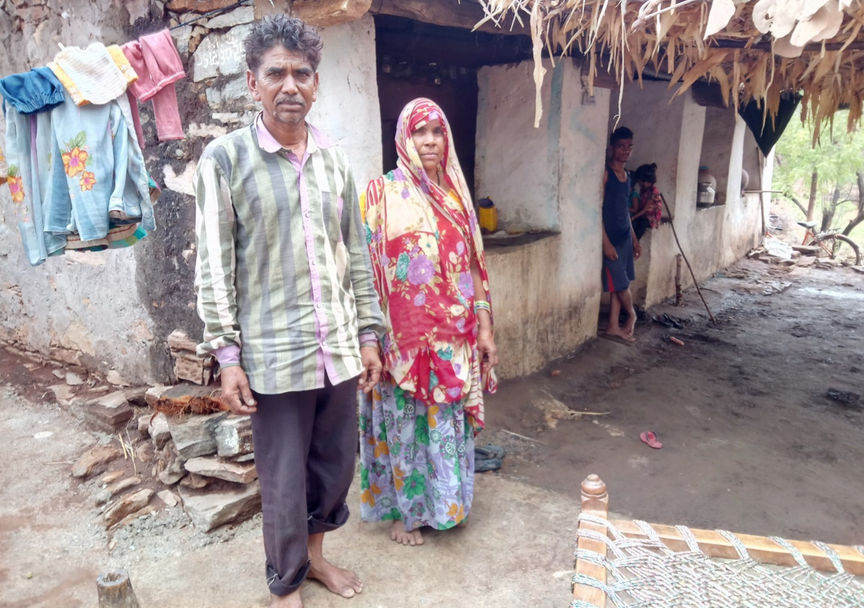
BY K V Venkatasubramanian, Independent Science Journalist
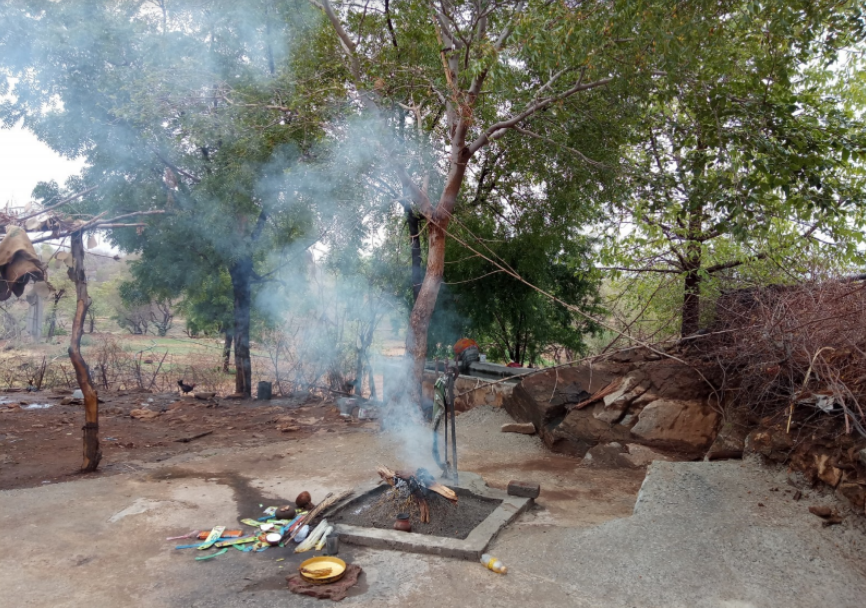
Himmatnagar: Gamar has just performed a ritual and offered prayers to devi mata, to ‘cure’ a malnutritional pregnant woman as we enter the remote Panch mahuda tribal hamlet in Gujarat’s Sabarkantha district. Sandhubhai Kasnabhai Gamar is a bhuva—a traditional faith healer and a key influencer for health seeking behaviour in the community.
Bhuvas (also known as bopa or bhadva) in Gujarat’s tribal communities believe that diseases can be treated or prevented only when the ‘environment’ is addressed. Their faith has a universal appeal. They attempt to diagnose ailments and diseases using their unorthodox methods, such as pairing of seeds or by looking at a bowl of water. Their treatment includes alcohol as medicine, holy ash (bhabhuti) and restrictions (baadha) or sacrifice (bali) of some kind. In many cases, they also use occult powers to treat patients. Following rituals, pregnant women and children are referred to hospital.
Villagers are also ‘treated’ by ‘bhagats (tribal healers) and ‘vaidya maharajs’ who use natural resources, including herbs, and practice Ayurvedic medicine. The composition of their herbal medicine is a closely guarded secret; passed on from father to son, generation to generation.
Panch mahuda in Khedbrahma taluk, tucked 140 km away from Ahmedabad, and with a population of 2,020, is one among scores of villages in Gujarat, which is battling malnutrition.
UNICEF has partnered with the bhuvas and bhagats to benefit from the authority and influence they enjoy in the community. The aim is to reach out to resistant and sceptical groups and increase coverage of health and nutrition services in the most interior pockets.
A working group of the government, UNICEF and NGOs has sensitised bhuvas and bhagats on nutrition issues and advised them to counsel their patients to adopt essential nutrition practices.
Also, mother support groups are trained to counsel and motivate pregnant, lactating mothers and malnourished ones with children aged less than two years, belonging to all castes, to join the government health system. Mothers discuss health issues among themselves and help each other. Volunteers moderate the discussion and a peer group is created. UNICEF, with support from IKEA Foundation, NGOs and other partners is inducing a behavioural change, and building a link for their integration with the state’s health care facilities.
“The system so generated can be run on a sustainable mode by the government,” says Hardik Shah, a health consultant with UNICEF.
Gamar says, “I do it for villagers’ health, happiness and peace. They are informed through word of mouth and come here from nearby places.” After performing the rituals, he refers them to hospital for treatment.
Doctors and social scientists say some of the practices in select situations can be complementary to the usual medical care.
India’s tribals remain the most nutritionally-deprived social groups, says a UNICEF report. Malnutrition in infancy causes stunting. More than half of adivasi children aged under five are stunted and fail to meet their potential for growth and development. Stunted children have stunted bodies, stunted brains and stunted lives; it hinders cognitive and physical growth. Experts say that the effects are largely irreversible. They generally complete fewer years of schooling and earn less as adults. Malnourished children also tend to become malnourished mothers, perpetuating the cycle.
A cobweb of factors influences their deprivation. These range from poverty and hunger due to loss of forest land and livelihood, poor rehabilitation measures, poor reach and quality of essential food and nutrition services during critical periods of life, geographical remoteness, weak governance and inadequate accountability mechanisms.
For long, nutrition has been a concern for Gujarat, where 33.6 percent of children are underweight, and 41.6 percent stunted, according to a recent UNICEF nationwide sample survey of over one lakh households. Severely underweight children constitute 11.3 percent in rural areas, and nearly 14 percent among scheduled tribes.
Malnutrition and dietary risks are the top two factors driving most deaths and disability in the state, according to Indian Council of Medical Research (ICMR). While the last decade saw slow progress in the proportion of stunted and underweight children, the proportion of wasted children has gone up substantially.
Malnutrition is India’s silent crisis and the challenge of our time. Maternal and child undernutrition is an elemental cause of more than one-third of child deaths—which account for 11 percent of the global burden. Most children under 2 years do not have access to good quality food and adequate nutrition.
– DeshGujarat
Recent Stories
- Diwali Food Safety Drive: AMC Seals Two Units, Fines Four Outlets ₹40,000
- HDFC Bank Gets Govt Nod to Offer Deposits Under Capital Gains Accounts Scheme
- GSSSB Announces Recruitment for 1,237 Class-3 Posts; Applications Open on November 5
- AMC to Hike Parking Fees; Proposed New Rates Here
- Mumbai Mayor Ritu Tawde Meets Gujarat CM Bhupendra Patel
- Holiday Inn Resort to Come Up in Sasan Gir