
Ahmedabad to spearhead development of secure quantum communication tech: ISRO Chairman
June 23, 2023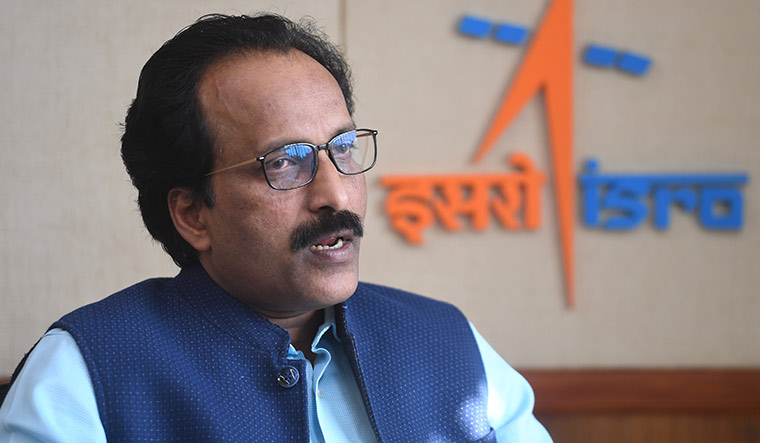
Ahmedabad: ISRO has set its sights on launching its own QKD satellite, and its chairman, S Somanath, stated that Ahmedabad will play a pivotal role in the development of the nation’s secure and unhackable quantum communication capabilities, specifically in quantum key distribution (QKD) technology. This announcement was made during the inaugural session of the Param Vikram 1000 High-Performance Cluster (HPC) computing facility at the Physical Research Laboratory (PRL).
A team of scientists from PRL, along with ISRO-Space Applications Centre (SAC), will collaborate with a few other institutions over the next two years to work on this initiative. In March 2020, ISRO-SAC accomplished a successful demonstration of free-space quantum communication over a span of 300 meters. Following that, PRL’s Thaltej campus conducted a series of experiments exploring this technology.
S Somanath emphasized the team’s capability in short-range optical quantum communication (QKD) over 300 meters in Ahmedabad. They aim to integrate this technology into their satellites, enabling closed-loop communication without signal attenuation via QKD. However, some improvements are still required. Ultimately, ISRO aims to develop its own QKD satellite as a prerequisite for a quantum-terrestrial link. Somanath expressed their commitment to continue refining the technology and incorporating it into future launches.
QKD relies on the principles of quantum physics rather than mathematical calculations and is a highly secure method. Quantum key distribution lies at the core of quantum communications and cryptographic systems.
In QKD, data like emails, video calls, or banking transactions are sent as classical bits (representing “0” and “1”) over a network, while the decryption keys are transmitted as quantum entangled states called qubits. These qubits, represented by binary values, are encoded into a polarized photon beam generated by a single photon or light source. Any attempt to eavesdrop on the transmission disrupts the quantum nature of the encrypted key, immediately alerting the parties involved. This is the reason OKD is a highly secure method of data transfer. DeshGujarat
Recent Stories
- Diwali Food Safety Drive: AMC Seals Two Units, Fines Four Outlets ₹40,000
- HDFC Bank Gets Govt Nod to Offer Deposits Under Capital Gains Accounts Scheme
- GSSSB Announces Recruitment for 1,237 Class-3 Posts; Applications Open on November 5
- AMC to Hike Parking Fees; Proposed New Rates Here
- Mumbai Mayor Ritu Tawde Meets Gujarat CM Bhupendra Patel
- Holiday Inn Resort to Come Up in Sasan Gir