
A Journalist’s Diary – 01
September 01, 2026
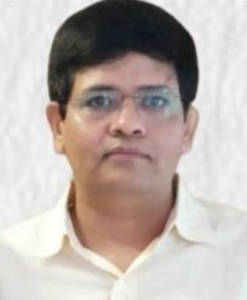
By Japan K Pathak
The First and Last Time P.K. Mishra Was Ever “Offered” Something
Prime Minister Narendra Modi’s Principal Secretary and senior civil servant P.K. Mishra narrated this incident in Ahmedabad on Saturday, prompting those present, including me, to burst out laughing.
Mishra said that when he was the District Collector of Mehsana, cattle smuggling was taking place through Gujarat towards Maharashtra. He personally took to the roads to verify this and joined late-night inspections of trucks. During one such inspection, a truck appeared suspicious. After following it, he brought a jeep in front of the truck and intercepted it. The truck stopped and a man got out.
When he realised that the person conducting the inspection was P.K. Mishra, the truck driver held out a Rs 20 note as a bribe. When Mishra refused, he was told that Rs 20 was the normal rate for allowing a truck to pass.
Mishra said that in his entire career as a civil servant, this was the first and last time anyone had ever offered him something.
Recounting another incident from his tenure as Mehsana Collector, Mishra said that communal riots had taken place in Siddhpur during that period, after which the famous Katyok fair was scheduled to be held on the banks of the Saraswati river. Against the backdrop of the communal riots, there was uncertainty within the administration over whether the fair should be held.
However, the then Home Secretary decided that the fair should go ahead. Mishra said that the decision was difficult but correct.
When taking a decision, it is easy to take the decision that is convenient. But when such a decision is not the right one and circumstances demand that a difficult decision be taken, it is appropriate to take the difficult but correct decision.
Even Judges Are Not Exempt
A senior sitting judge of the Supreme Court was recently near Ahmedabad, where he spoke openly behind closed doors. He had been sent there by the Chief Justice of India on his behalf.
One thing he said made me realise that even very prominent people can believe an AI-generated video to be genuine.
The judge said that he was travelling to Ahmedabad by air when he watched a cricket video in which a ball hit by a batsman went up and struck a drone. He forwarded the video to his son-in-law, who lives abroad. His son-in-law replied that the video had been created using artificial intelligence. He also explained which details visible in the video made it clear that it had been generated using AI.
Recently, a senior Delhi-based journalist, who has now gone beyond his retirement age, twice mistook viral AI-generated videos for genuine ones and posted them online. People had to point out in the comments that the videos were AI-generated, and that it was unbecoming of a senior journalist like him to react to them and circulate them further while believing them to be genuine.
The judge shared another incident. His nephew’s wife had passed away, and he needed to reach the place in time. He finished court at 4 pm instead of 4:30 pm and was preparing to leave for the place of the deceased when his registrar pointed out that, due to traffic, it would take a long time to reach the destination and he would not be able to make it in time. The registrar suggested that he could take the metro instead.
He would reach the last metro station, from where a pre-booked Ola car would take him conveniently and on time to his relative’s house. By the time he finished his work, his car would also arrive there for the return journey.
The judge chose this option and took the metro for the first time in his life. Someone in the metro recognised him and realised that he was a judge, and offered him his seat. The judge said that he preferred to stand, but made his wife sit in the vacant seat.
Within just 17 minutes, they reached the designated station, where the Ola taxi was waiting. The taxi started moving, but seven or eight minutes later, they came across a small bridge where there was a traffic jam.
The reason was that the bridge had been constructed on one side, but not on the other. Thus, only one side of the partially completed bridge was usable, creating a bottleneck and resulting in a traffic jam.
The taxi driver told the judge that “some bloody judge” had granted a stay, because of which the bridge work had been stalled for months. Those taking decisions do not know the realities on the ground, and we have to suffer the consequences.
The judge later found out that the bridge had been tendered and the work had also begun, but the contractor had been blacklisted. While it was in the public interest for a fresh tender to be issued, the contractor had approached the court and obtained a stay, and the work had remained stalled for around nine months.
What the judge subsequently told us summed up the entire matter. He said that the court’s approach was now that public interest should always be considered above everything else.
He stressed that there should be an understanding of ground realities. As a journalist, it was gratifying for me to hear him say that journalists have knowledge of ground realities and that this role is extremely important.
What Questions Did NRI Gujaratis Ask Gujarat’s Chief Minister Abroad?
Chief Minister Bhupendra Patel was on a visit to the United States and Canada, where he had very open and candid interactions with Gujaratis living abroad. The Gujaratis also asked him all kinds of questions.
One man said that people wanted to land directly in Ahmedabad from abroad and asked that a direct flight be started. The Chief Minister said that if it was within their power, could be done through their decision and was in the public interest, then they would certainly have to do it. (However, this does not fall within the state government’s jurisdiction.) He said they would make efforts.
Another man said that his containers had already been dispatched from abroad, but the government changed its policy, due to which the containers got stuck. Nitin Patel helped him and they barely managed to get out of the situation, but he asked how business could be conducted under such circumstances.
The Chief Minister rejected the possibility of such a situation occurring and said that if there was any genuine problem of this nature, the government was always available to help.
Another man asked about something he had read in a Gujarati newspaper, claiming that a certain number of slaughterhouses were operating in Gujarat. The Chief Minister said his office takes note of every negative report published by newspapers and, if the report is true, action is also taken. He said the matter would also be looked into, but reports are not always accurate.
For instance, one report had carried a critical depiction of people carrying a funeral procession while walking through water. However, when the matter was investigated, it was found that there was actually a good road from that place to the cremation ground, but the people were walking through the water because it was a shorter route to the cremation ground.
One man even asked when prohibition on alcohol would be lifted. The question left the Chief Minister surprised. He said that wherever it was considered necessary, a decision had been taken on the subject (GIFT City). However, lifting prohibition entirely was not possible.
An NRI also raised a question before the Chief Minister regarding properties occupied by tenants. The Chief Minister said that the government was bringing legislation in the Assembly concerning tenants.
The NRIs had so many questions for the Chief Minister that there was simply no time to answer all of them. In the end, the questions had to be collected in writing.
(The writer can be reached at japanpathak at gmail dot com.)
Related Stories
Recent Stories
- Gujarat Deputy CM Harsh Sanghavi on Japan Visit
- Gujarat Govt Orders Criminal Action Against Contractor Over Poor Bridge Construction Quality
- Day 7 Navratri 2026 Live: Falguni Pathak Garba, LVP Vadodara, United Way of Baroda & More
- Illegal Bangladeshi Migrant Woman Nabbed in Junagadh
- AMC Seals Hocco Ice Cream and 7 Other Shops Near Law Garden
- Gujarat Govt Assures Adequate Electricity Supply; Secures Additional Power and Coal