
Gujarat Forest Dept to Pay Villagers for Collecting Plastic Waste Near Nalsarovar
August 11, 2026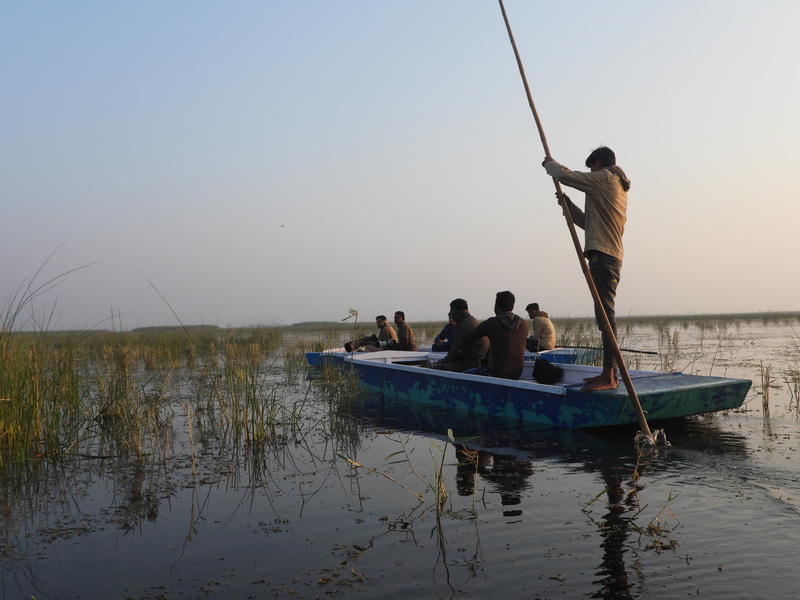
Gandhinagar: In a major initiative to conserve the fragile ecosystem of the Nalsarovar Bird Sanctuary, the Gujarat Forest Department has launched a comprehensive Plastic Waste Management Project to reduce plastic pollution in and around the Ramsar-designated wetland. As part of the project, the Forest Department will pay villagers for collecting plastic waste near the Nalsarovar Bird Sanctuary.
The project aims to tackle the growing threat of plastic waste while promoting environmental awareness and creating livelihood opportunities for local communities.
Nalsarovar Bird Sanctuary was designated a Ramsar Site (Wetland of International Importance) under the Ramsar Convention in 2012. Located along the Central Asian Flyway, the sanctuary serves as a vital wintering and stopover habitat for hundreds of thousands of migratory birds from Central Asia, Siberia and Europe.
“By establishing a scientific plastic waste management system around this globally important wetland, we aim to eliminate plastic pollution and protect Nalsarovar’s unique ecosystem,” said Arjun Modhwadia, Minister for Forests and Environment.
“The ₹2.94-crore project has been approved under the Project for Eco-Restoration in Gujarat (PERG), supported by the Japan International Cooperation Agency (JICA). It is being implemented by the Nalsarovar Bird Sanctuary, Wildlife Division, Sanand, in collaboration with local gram panchayats, Eco-Development Committees (EDCs) and community members,” an official said.
A dedicated Plastic Waste Collection Centre has already been established at Kayla village in Viramgam taluka of Ahmedabad district. The project will cover villages surrounding Nalsarovar, including Vekariya, Kayla, Shahpur, Dharji and Meni in Ahmedabad district, and Nani Kathechi and Ranagadh in Surendranagar district, said Dr Jaipal Singh, Principal Chief Conservator of Forests (Wildlife) and Chief Wildlife Warden, Gujarat.
“The initiative is expected to substantially reduce the volume of plastic entering Nalsarovar every year, thereby protecting its rich biodiversity and ecological balance. The Forest Department will undertake the systematic collection of plastic waste from villages and transport it to the collection centre,” said Pravin Mali, Minister of State for Forests and Environment.
“Waste collection bins are being installed across villages, while Eco-Development Committees will appoint volunteers known as ‘Swachhta Praharis’ to encourage residents to segregate and properly dispose of dry plastic waste. A detailed work study has also been conducted to streamline daily waste collection and transportation,” Mali added.
Forest Department to Purchase Plastic Waste
To encourage community participation, the project will purchase plastic waste collected from villages around the Nalsarovar Bird Sanctuary.
“The project has also created essential infrastructure, including a waste collection shed, a processing unit, a compound wall, a security cabin, water and electricity facilities, a plastic waste processing machine, safety equipment and waste collection bins. It is expected to generate employment for local residents through their active participation in waste collection and management, making the initiative both environmentally sustainable and socially inclusive,” said S.K. Srivastava, Chief Project Director (PERG) and Additional Principal Chief Conservator of Forests.
270 Bird Species Recorded in Latest Census
The importance of protecting Nalsarovar has been reinforced by the latest annual bird census, which recorded a significant increase in both bird diversity and population during the 2025–26 migratory season.
A total of 270 bird species, with an estimated population of 6,42,232 birds, were recorded across 50 survey zones, representing an increase of 26 species and 2,28,399 birds compared with the 2023–24 census.
The sanctuary also reported sightings of several rare and globally threatened species, including the Yellow-breasted Bunting, Sociable Lapwing, Indian Skimmer, Baer’s Pochard, Dalmatian Pelican and Sarus Crane, underlining Nalsarovar’s growing importance as a critical habitat for migratory and endangered birds.
Recent Stories
- Mumbai Coastal Road crash: Ahmedabad origin BMW driver youth had prior cases for dangerous driving, drunken brawl
- Scorpio SUV hits 12 padyatris walking to Ambaji in hit-and-run accident; mob sets vehicle on fire
- Banned Pakistani skin-whitening creams being sold in Ahmedabad despite CDSCO warning
- Video of rats inside McDonald’s outlet in Rajkot goes viral; civic body orders probe
- Ahmedabad Police seize over 100 two-wheelers for flouting traffic norms
- Gujarat Police warn against ‘Rent a Garba partner’ ads going viral on Instagram