
Sardar Sarovar Narmada Dam over 82% full; Gujarat completes 70% average monsoon rain
August 11, 2026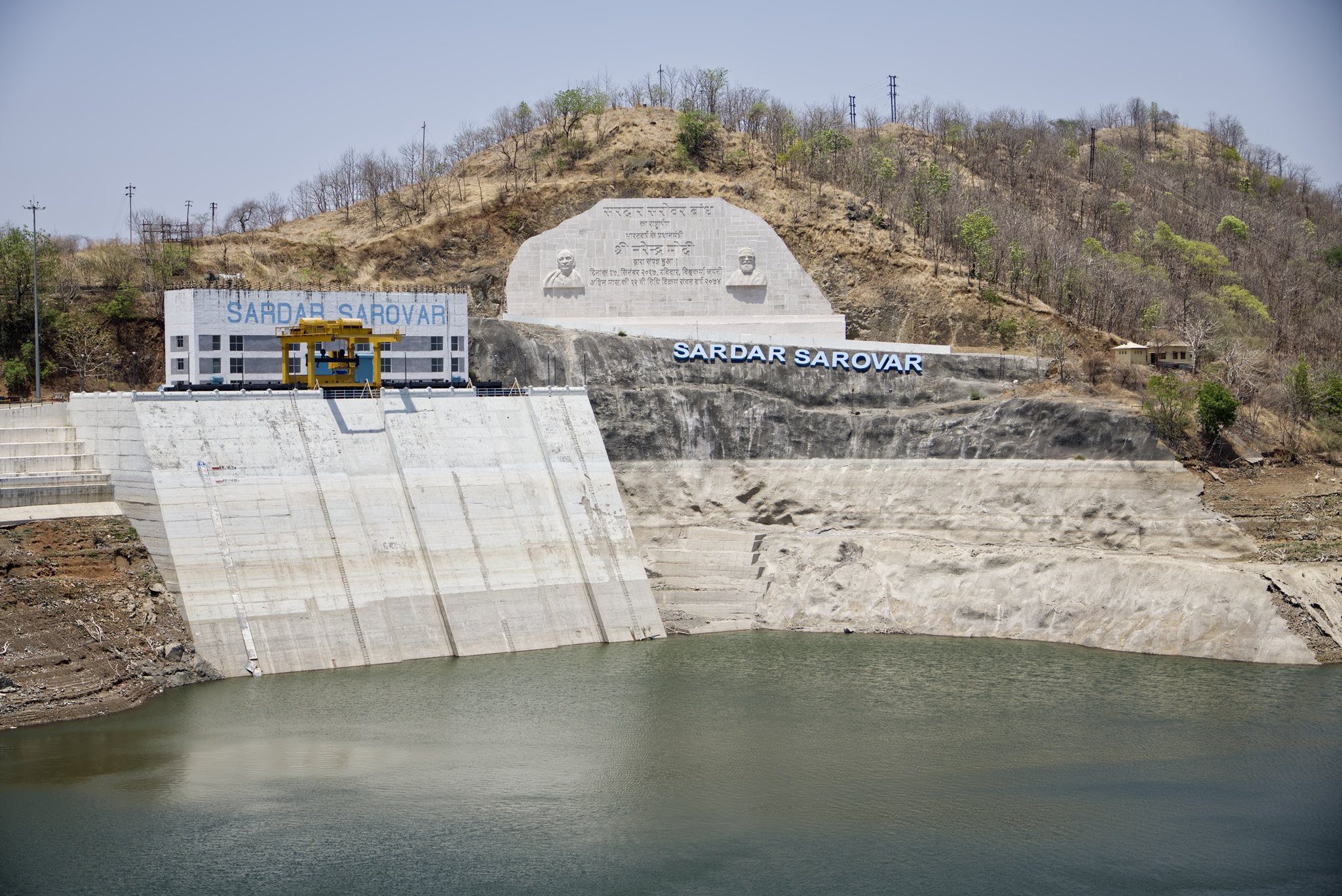
Gandhinagar: Concerns over reduced rainfall during El Niño years had initially created anxiety in Gujarat at the beginning of the monsoon season, which was delayed. However, the latest figures released on Tuesday morning show significant relief, with the Sardar Sarovar Narmada Dam reaching 82.55% of its total storage capacity as of 8 am on August 11. The water level in the dam, which has a full reservoir level of 138.68 metres, has now reached 133.37 metres (437.59 feet).
The Narmada reservoir currently holds 2,75,768 million cubic feet (mcft) of water. An inflow of around 30,453 cusecs is being received into the reservoir, while the outflow into the river stands at 622 cusecs.
The development brings substantial relief for Gujarat, as the Narmada project remains a key source of drinking and irrigation water for the state. The improved storage position also provides greater confidence about water availability in the coming months.
Beyond the Narmada Dam, the latest status of Gujarat’s 206 other dams and reservoirs shows a relatively strong water storage position across the state. Together, these reservoirs currently hold 3,57,498 mcft, equivalent to 64.08% of their total storage capacity.
Of the 206 reservoirs, 25 are 100% full, while 29 are between 70% and 100% capacity. Another 34 dams are between 50% and 70%, 47 are between 25% and 50%, and 71 dams remain below 25% capacity. As of this morning, 39 dams are under high alert, five under alert and 10 under warning.
The latest rainfall figures also show that Gujarat has received 641.64 mm of cumulative rainfall, or 70.60% of the state’s average rainfall, as of 6 am on August 11. The South Gujarat region has received the highest share at 97.36% of its average, while East Central Gujarat stands at 68.10%, Saurashtra at 54.76%, North Gujarat at 51.65% and Kutch at 29.05%.
The figures mark a considerable improvement in the state’s overall water position compared with the concerns at the start of the monsoon, with reservoir levels continuing to benefit from rainfall and inflows from upstream catchments. DeshGujarat
Recent Stories
- “Why Didn’t You Go to Jharkhand?” Surat BJP MP Questions Priyanka Gandhi Outside Parliament
- Ahmedabad PG Rape Case: Security Agency Operator Held Over Licence, Verification Lapses
- Ahmedabad BRTS Announces Route Changes for Tiranga Yatra on August 12
- Vadnagar Auto-Rickshaws Get Heritage Makeover Under GSFC Initiative
- Gujarat Forest Dept to Pay Villagers for Collecting Plastic Waste Near Nalsarovar
- Gujarat to Have Four Centres of Excellence to Accelerate Natural Farming